Take the quiz
Signs and symptoms
On this page
The three main indicators of a sub-optimal treatment response are:
Low hemoglobin (anemia)
Anemia is a sign of PNH resulting in a low red blood cell count or hemoglobin levels that are under the normal range.* When it becomes chronic, it can impact organ function and lead to other complications.
*Hb normal range: 115–155 g/L (females), 125–170 g/L (males).
Fatigue
Fatigue is a symptom of anemia that can affect people to varying degrees. It can be felt as diminished energy levels and slowness that interferes with everyday life. In more severe cases, fatigue can be debilitating, leading to loss of independence, decreased physical activity, and functional decline if left untreated.
Transfusion dependence
Transfusion dependence is when regular blood transfusions are required. Blood transfusions can be used as a short-term solution to improve hemoglobin levels, thereby helping with anemia, and reduce the impact of fatigue in your everyday life. However, when transfusions are required regularly, it can lead to iron overload — a condition that can damage organs if not addressed.
Other signs and symptoms you may experience
- Blood clots
- Blood in urine
- Headaches
- Trouble breathing
- Difficulty exercising
- Trouble concentrating (brain fog)
- Loss of appetite
- Difficulty swallowing
- Rapid heartbeat
- Abdominal or chest pain
- Erectile dysfunction
If you're on treatment and experiencing these symptoms, talk to your doctor.
PNH perspectives
Hear from real patients and doctors
When is it a sign of a sub-optimal treatment response?
Fatigue, low hemoglobin and regular blood transfusions are just a few of the signs and symptoms of a sub-optimal response to your current treatment.
When is it a sign of a sub-optimal treatment response?
Fatigue, low hemoglobin and regular blood transfusions are just a few of the signs and symptoms of a sub-optimal response to your current treatment.
Don't settle for a treatment that is "good enough"
Medications used to treat a sub-optimal response work differently than those used as a first treatment.
Don't settle for a treatment that is "good enough"
Medications used to treat a sub-optimal response work differently than those used as a first treatment.
Talk to your doctor if you think you may be experiencing sub-optimal treatment response
This guide gives you questions and prompts to help you discuss your treatment.
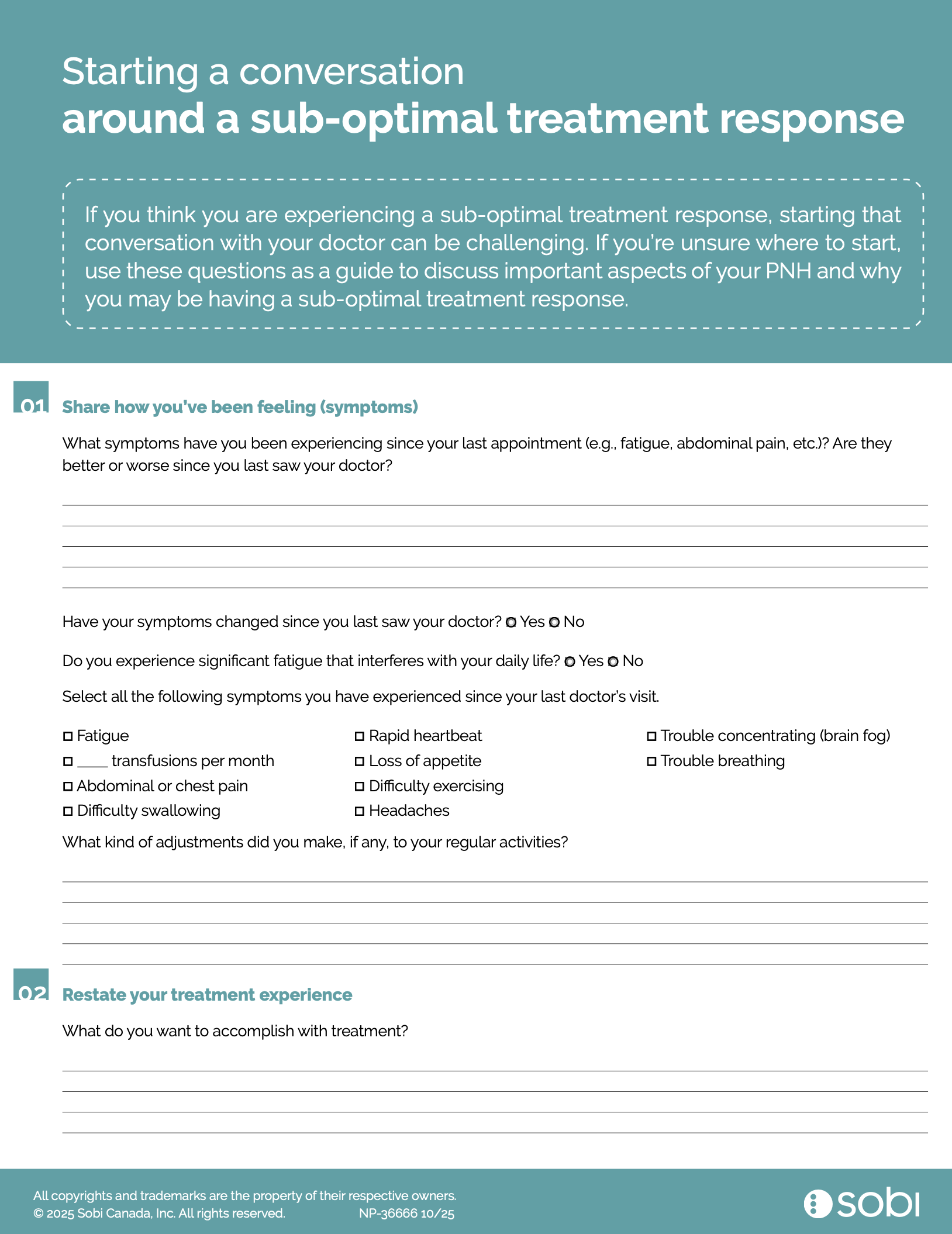
Talk to your doctor if you think you may be experiencing sub-optimal treatment response
This guide gives you questions and prompts to help you discuss your treatment.