Take the quiz
Knowing your treatment options
Not everyone responds the same way to first-line PNH treatment, complement C5 inhibitor (C5i). (You may also know this as SOLIRIS® [eculizumab], ULTOMIRIS® [ravulizumab] or PIASKY® [crovalimab]).
Knowing your treatment options
Not everyone responds the same way to first-line PNH treatment, complement C5 inhibitor (C5i). (You may also know this as SOLIRIS® [eculizumab], ULTOMIRIS® [ravulizumab] or PIASKY® [crovalimab]).
On this page
There are different reasons why a sub-optimal treatment response can occur. In some people, intravascular hemolysis (IVH) may not be fully controlled by their first-line treatment. In others, extravascular hemolysis (EVH) can develop as a consequence of C5i therapy. Both these events can lead to ongoing or reappearing symptoms, which is why it's important to find the right treatment to address hemolysis completely.
If you suspect you are having a sub-optimal response, speak with your doctor.
See what's next when you're having a sub-optimal response to C5i therapy.
Medical management
Your doctor may change your current dose or explore other treatment options to help address IVH and EVH, including:
First-line therapies: Initial treatment options for PNH
How it works
Addresses intravascular hemolysis
Medicines
PrSOLIRIS® (eculizumab)
PrULTOMIRIS® (ravulizumab)
Second-line therapy: Options if experiencing a sub-optimal response to initial treatment
How it works
Addresses intravascular and extravascular hemolysis
Medicines
PrEMPAVELI® (pegcetacoplan)
How it works
Addresses intravascular and extravascular hemolysis
Medicines
PrFABHALTA® (iptacopan)
How it works
Adjunctive (add-on) therapy: This treatment is used together with a C5i to address extravascular hemolysis when necessary
Medicines
PrVOYDEYA™ (danicopan)
Type
How it works
Medicines
First-line therapies: Initial treatment options for PNH
Addresses intravascular hemolysis
PrSOLIRIS® (eculizumab)
PrULTOMIRIS® (ravulizumab)
PrPIASKY® (crovalimab)
Second-line therapy: Options if experiencing a sub-optimal response to initial treatment
Addresses intravascular and extravascular hemolysis
PrEMPAVELI® (pegcetacoplan)
Addresses intravascular and extravascular hemolysis
PrFABHALTA® (iptacopan)
Adjunctive (add-on) therapy:
This treatment is used together with a C5i to address extravascular hemolysis when necessary
PrVOYDEYA™ (danicopan)
Learn how different complement inhibitors work to treat PNH
Learn how different complement inhibitors work to treat PNH
How the complement system acts in PNH

PNH perspectives
Hear from real patients and doctors
Why addressing IVH, and EVH, if present, is key to keeping your PNH under control
Medications used to treat a sub-optimal response work differently than those used as a first treatment.
Why addressing IVH, and EVH, if present, is key to keeping your PNH under control
Medications used to treat a sub-optimal response work differently than those used as a first treatment.
Bone marrow/stem cell transplants
In most cases, PNH can be managed with prescription medications. However, when these medications no longer work, or if a person has concurrent bone marrow failure, transplants may be the last resort. This option is typically reserved for select cases because of the challenges in finding a well-matched donor and the risks of health complications and mortality.
Your treatment is the topic of ongoing conversation with your doctor
Whatever your treatment plan will be, your doctor will continue to make adjustments as needed based on your results and treatment response. This is why it is important to keep track of how you're feeling and what's working as you progress through treatment.
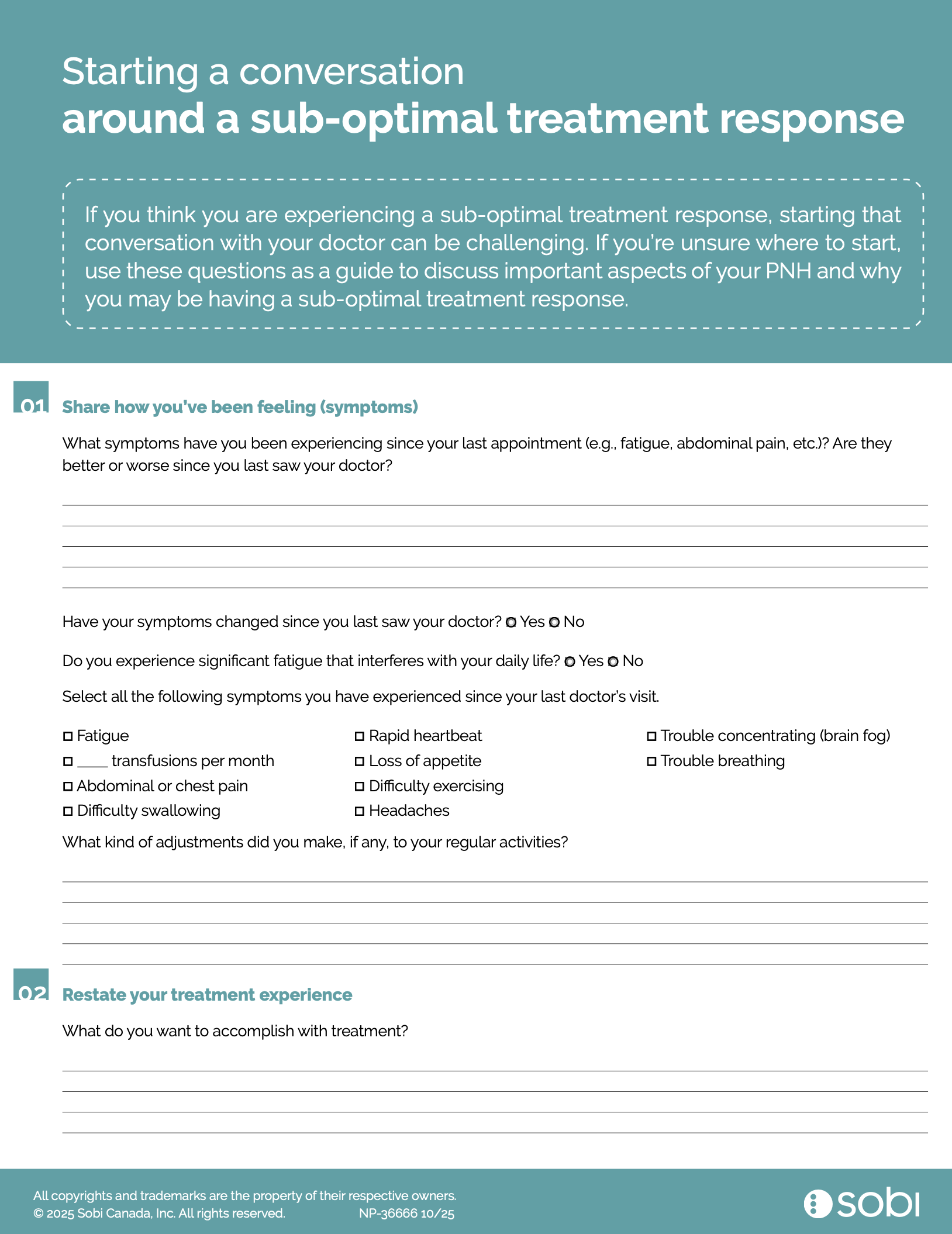
Your treatment is the topic of ongoing conversation with your doctor
Whatever your treatment plan will be, your doctor will continue to make adjustments as needed based on your results and treatment response. This is why it is important to keep track of how you're feeling and what's working as you progress through treatment.

How does your sub-optimal treatment response affect your daily life?
Take the quizLifestyle tips to manage the daily effects of a sub-optimal treatment response
Talk to your doctor before making any adjustments to your lifestyle.
What you eat matters
Prepare your meals with sensible portions of whole or minimally processed foods.
- Eat mostly plant-based food
- Aim for variety in your food
- Focus on foods high in vitamins and minerals, fibre and protein
- Eat at least 5 portions (400–600 g in total) of non-starchy vegetables and fruits daily
- Include unprocessed grains and legumes with every meal
Know what foods to limit or avoid:
- Processed foods
- Refined, starchy food
- Salt-preserved or salty food
- "Fast food"
Stay active
Physical activity can improve your energy levels and provide physical and emotional health benefits. Physical activity can include:
Gentle exercises:
- Walking
- Yoga
- Light housework
Higher intensity activities:
- Cycling
- Running
Rest up
It is important you try to get enough sleep. Getting enough sleep at night may help you have more energy during the day and limit fatigue.
Some tips to help reduce fatigue include:
- Establishing a sleep routine so that you go to sleep and wake up at the same time each day
- Avoiding coffee, tea, chocolate and soda during the evenings
- Limiting your intake of alcohol
- Keeping in mind how naps affect you - for example, do you sleep well at night if you napped in the afternoon?
- Limiting screentime at least 2 hours before bed
- Doing something you find relaxing before going to bed
What you eat matters
Prepare your meals with sensible portions of whole or minimally processed foods.
- Eat mostly plant-based food
- Aim for variety in your food
- Focus on foods high in vitamins and minerals, fibre and protein
- Eat at least 5 portions (400-600 g in total) of non-starchy vegetables and fruits daily
- Include unprocessed grains and legumes with every meal
Know what foods to limit or avoid:
- Processed foods
- Refined, starchy food
- Salt-preserved or salty food
- "Fast food"
Stay active
Physical activity can improve your energy levels and provide physical and emotional health benefits. Physical activity can include:
Gentle exercises:
- Walking
- Yoga
- Light housework
Higher intensity activities:
- Cycling
- Running
Rest up
It is important you try to get enough sleep. Getting enough sleep at night may help you have more energy during the day and limit fatigue.
Some tips to help reduce fatigue include:
- Establishing a sleep routine so that you go to sleep and wake up at the same time each day
- Avoiding coffee, tea, chocolate and soda during the evenings
- Limiting your intake of alcohol
- Keeping in mind how naps affect you - for example, do you sleep well at night if you napped in the afternoon?
- Limiting screentime at least 2 hours before bed
- Doing something you find relaxing before going to bed
Sign up for the Better Living with PNH Guide!
Get practical advice on fitness, nutrition and mindfulness practices, developed specifically for people with PNH by our team of experts.
Learn more on PNHCA